Are Sweepstakes Casinos Legal in California Right Now?
Dual-currency sweepstakes casinos have been banned in California since January 1, 2026. Assembly Bill 831 makes it a misdemeanor to operate, support, facilitate, or promote an online sweepstakes game that uses Gold Coins and redeemable Sweeps Coins.
Major platforms, including McLuck, Pulsz, WOW Vegas, Play Fame, Mega Bonanza, and Legendz, have removed California from their eligible states. They no longer accept California registrations or process redemptions for residents.
AB 831 applies even when a platform offers a free-entry method. No legal exception or workaround currently exists.


- 66% Off Mystery Box
- 25 Mystery Coins + 5 Cards
- For only $9.99
- Sign-up, Get 5 Cards + 2 MC
- Up to 45 MC Referral Bonus
- VIP Exclusive Perks
- Surprise Daily Reward Drops
Terms 21+
What This Means for Players
California players are not criminally liable under AB 831. The law targets operators, platform providers, payment processors, financial institutions, and media affiliates.
Players who used sweepstakes casinos before January 1, 2026 did not break the law, and the statute does not apply retroactively to consumers.
California residents may still access single-currency platforms, parimutuel advance-deposit wagering games, and Gold-Coin-only social casinos. Clovr only links California readers to platforms currently considered accessible under AB 831.
AB 831 and the Sweepstakes Casino Ban Explained
AB 831 was introduced in February 2025 and signed by Governor Gavin Newsom on October 11, 2025. It took effect on January 1, 2026 as California Penal Code Section 337o.
The law targets platforms that pair a purchasable, non-redeemable currency such as Gold Coins with a separate currency such as Sweeps Coins that can be redeemed for cash or prizes. A no-purchase entry method does not exempt a platform from the ban.
Violations are misdemeanors punishable by fines of $1,000 to $25,000 per violation, up to one year in county jail, or both.
AB 831 passed unanimously. The California Senate approved it 36-0 on September 6, 2025, and the Assembly passed it 63-0 on September 12, 2025.
AB 831 Legislative Timeline
| Date | Event |
|---|---|
| February 2025 | AB 831 introduced in the California Assembly |
| September 6, 2025 | California Senate passes AB 831, vote 36-0 |
| September 12, 2025 | California Assembly passes AB 831, vote 63-0 |
| October 11, 2025 | Governor Gavin Newsom signs AB 831 as Chapter 623, Statutes of 2025 |
| December 31, 2025 | Final deadline for California players to redeem all Sweeps Coins balances |
| January 1, 2026 | California Penal Code section 337o takes effect statewide |
AB 831 also adds a cross-reference to California Business and Professions Code section 17539.1, which governs deceptive prize promotions. This cross-reference situates the dual-currency ban within the broader California consumer protection framework alongside the penal code.
The Gambling Control Act, California’s existing licensing framework for card rooms and other licensed gambling enterprises, is explicitly unaffected by AB 831. Licensed enterprises operating under the Gambling Control Act are exempt from section 337o. The ban targets only the dual-currency online sweepstakes model that operated outside the licensed gambling framework.
Who Is Liable Under AB 831 and Who Is Not
California Penal Code Section 337o applies to businesses and individuals that knowingly or willfully support a banned online sweepstakes game. This includes operators, payment processors, financial institutions, geolocation providers, game suppliers, platform providers, and media affiliates.
Liability requires knowing or willful participation. A business must be shown to have knowingly supported, facilitated, or promoted a prohibited platform.
AB 831 also creates liability for publishers, influencers, and other affiliates that knowingly promote banned dual-currency casinos to California users. For this reason, Clovr does not feature or link to prohibited operators for California visitors.
California players are not criminally liable under the law. A Senate amendment protects consumers from both retroactive and ongoing liability. Players who used these platforms before January 1, 2026 face no criminal exposure. Accessing a banned platform afterward may violate the operator’s terms, but it is not a crime under Section 337o.
How the Dual-Currency Model Worked
AB 831 targets platforms that use two connected virtual currencies.
Gold Coins are purchased for entertainment play. They have no cash value and cannot be redeemed for cash, gift cards, cryptocurrency, or other prizes.
Sweeps Coins are promotional currencies distributed through daily rewards, mail-in requests, or as bonuses with Gold Coin purchases. They may be redeemed for real prizes, which gives the model its real-value component.
Gold Coins vs Sweeps Coins vs Single-Currency Model
| Currency Type | Purchasable? | Redeemable for Prizes? | Legal in California After AB 831 |
|---|---|---|---|
| Gold Coins | Yes | No | Yes. No redemption mechanic present. |
| Sweeps Coins | No (distributed free) | Yes | No. Triggers California Penal Code section 337o. |
| Single redeemable currency (Card Crush model) | No (distributed free) | Yes | Outside section 337o’s dual-currency definition under current interpretation. |
The sweepstakes legal model existed because the no-purchase-necessary entry route removed consideration from the three-element gambling test. California AB 831 superseded this framework for dual-currency online play by making the structure itself the prohibited element. The same structural AMOE argument no longer provides a legal defense in California for any platform that pairs Gold Coins with Sweeps Coins.
Why California Closed the Loophole
Sweepstakes casinos historically relied on the three-part lottery test of prize, chance, and consideration. By offering a free alternative method of entry, operators argued that no purchase was required and the consideration element was removed.
AB 831 ended that argument in California. The law bans the dual-currency structure even when a valid free-entry option exists. It does not change the traditional lottery test. Instead, it makes the pairing of purchasable Gold Coins and redeemable Sweeps Coins unlawful.
The key issue is the redemption feature. A platform that pairs a purchasable, non-redeemable currency with a separate redeemable currency may fall under Section 337o. Platforms that remove either the dual-currency structure or the prize-redemption feature may fall outside the law’s definition.
The term “online sweepstakes game” refers to this specific structure. Simply using the word “sweepstakes” does not automatically make a platform illegal.
Who Pushed for California’s Sweepstakes Casino Ban?
California tribal gaming groups were the main supporters of Assembly Bill 831. Their goal was to protect an industry generating more than $9 billion annually from unlicensed online competition.
California has over 65 tribal casinos operating under tribal-state compacts negotiated through the Indian Gaming Regulatory Act. These agreements give tribes exclusive Class III gaming rights and protect them from unlicensed commercial casino competition.
Supporters of AB 831
The California Nations Indian Gaming Association and the Yuhaaviatam of San Manuel Nation were leading supporters. They argued that dual-currency sweepstakes casinos:
- Offered real-prize gaming without tribal licenses
- Competed directly with tribal casinos
- Operated like online casinos in a state where regulated online casino gaming is unavailable
Supporters also argued that these platforms did not follow the same regulations or contribute revenue toward tribal government services.
Opposition to the Ban
The Social Gaming Leadership Alliance opposed AB 831. The industry group claimed the law could eliminate more than $1 billion in economic activity and reduce technology-sector employment in California.
The opposition did not change the bill’s outcome. The Senate approved AB 831 by a 36-0 vote, while the Assembly passed it 63-0.
The tribal coalition’s argument succeeded because lawmakers viewed unlicensed sweepstakes casinos as a threat to the exclusivity and economic protections established under tribal gaming compacts.
California’s Gambling Regulators and Existing Law
| Agency | Primary Role |
|---|---|
| California Gambling Control Commission | Licensing, regulation, card room oversight, and compact administration |
| Bureau of Gambling Control | Investigations, enforcement, and compliance checks |
The Bureau of Gambling Control operates within the California Department of Justice. Together, these agencies oversee enforcement related to AB 831.
California does not have an agency called the Department of Gaming. References to such an agency are incorrect.
Existing Gambling Laws
California Penal Code Section 330 is the state’s general gambling prohibition. It covers certain card games, lotteries, and other activities played for money or value.
Dual-currency sweepstakes casinos previously relied on free-entry methods to argue that no purchase was required. AB 831 added Penal Code Section 337o to specifically prohibit the Gold Coin and Sweeps Coin model.
What AB 831 Does Not Ban
AB 831 does not restrict every form of gaming in California. Licensed card rooms, tribal casinos, and the California State Lottery are unaffected.
Parimutuel advance-deposit wagering platforms also remain legal because they operate under a separate framework tied to horse racing. Single-currency promotional platforms may also fall outside Section 337o if they do not use the Gold Coin and Sweeps Coin structure.
Legal Alternatives for California Players in 2026
| Platform | Currency Model | Real-Prize Redemption | Legal Basis in California | Status Note |
|---|---|---|---|---|
| Card Crush | Single redeemable currency (Mystery Coins) | Yes | Outside section 337o dual-currency definition | Launched Dec 29, 2025; CA legality not formally confirmed by regulators |
| GiddyUp | Parimutuel ADW | Yes, tied to horse-race results | Federal parimutuel framework; outside section 337o | Launched Mar 19, 2026; available in California |
| Horseplay | Parimutuel ADW | Yes, tied to horse-race results | Federal parimutuel framework; outside section 337o | Available in California |
| Chumba Casino (GC only) | Gold Coins only | No | No redemption mechanic; outside section 337o | Entertainment-only in CA; VGW Group |
| LuckyLand Slots (GC only) | Gold Coins only | No | No redemption mechanic; outside section 337o | Entertainment-only in CA; VGW Group |
| Global Poker (GC only) | Gold Coins only | No | No redemption mechanic; outside section 337o | Entertainment-only in CA; VGW Group |
| WOW Vegas (GC only) | Gold Coins only (CA mode) | No | No redemption mechanic; outside section 337o | Entertainment-only in California |
Verified as of June 2026. Platform availability, currency models, and regulatory status can change without notice. Always confirm current state availability directly with the operator before registering or depositing.
- 66% Off Mystery Box
- 25 Mystery Coins + 5 Cards
- For only $9.99
- Sign-up, Get 5 Cards + 2 MC
- Up to 45 MC Referral Bonus
- VIP Exclusive Perks
- Surprise Daily Reward Drops
Terms 21+
Card Crush: Single-Currency Model
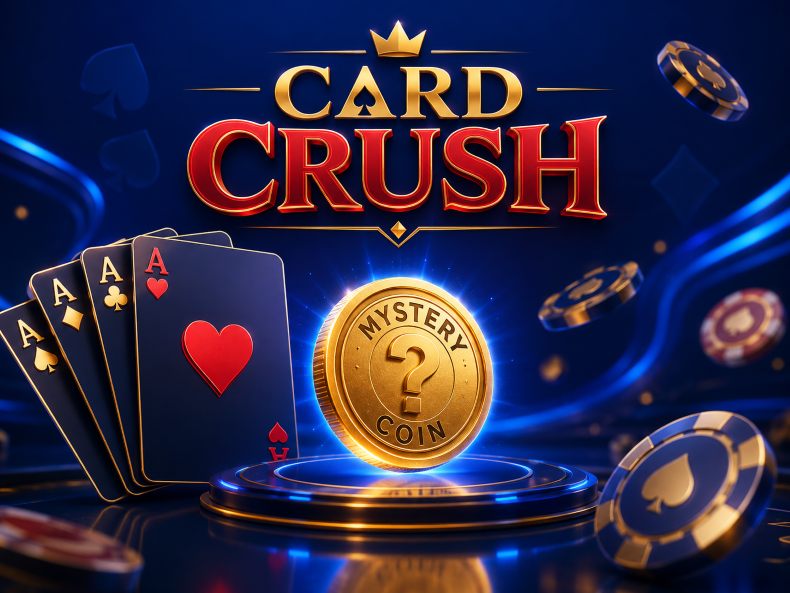
Card Crush is a single-currency platform designed for states where dual-currency sweepstakes casinos are banned, including California. It uses one redeemable currency, Mystery Coins, without a separate purchasable Gold Coin currency. This structure differs from the Gold Coin and Sweeps Coin model prohibited by AB 831.
The platform is operated by Vision NL Limited, registered in the Isle of Man under number 023022V. It launched on December 29, 2025 and accepted players from California and New York. In January 2026, McLuck promoted Card Crush to former California users as a post-ban alternative.
Card Crush’s California availability is based on the argument that its single-currency structure falls outside Penal Code Section 337o. However, regulators have not formally confirmed the model’s long-term legality. Players should review the platform’s terms before adding funds.
- 66% Off Mystery Box
- 25 Mystery Coins + 5 Cards
- For only $9.99
- Sign-up, Get 5 Cards + 2 MC
- Up to 45 MC Referral Bonus
- VIP Exclusive Perks
- Surprise Daily Reward Drops
Terms 21+
GiddyUp and Horseplay: Parimutuel ADW Platforms

GiddyUp and Horseplay use a parimutuel advance-deposit wagering model tied to real horse-race results. This structure operates under a separate federal framework and is not covered by AB 831’s dual-currency ban.
GiddyUp, operated by KHK Games, launched on March 19, 2026 and accepts players in California and 16 other states. Horseplay uses a similar model and also remains available to California residents.
Because these platforms are classified under parimutuel wagering rather than sweepstakes gaming, they remained legal before and after AB 831.
Gold-Coin-Only Social Casino Mode
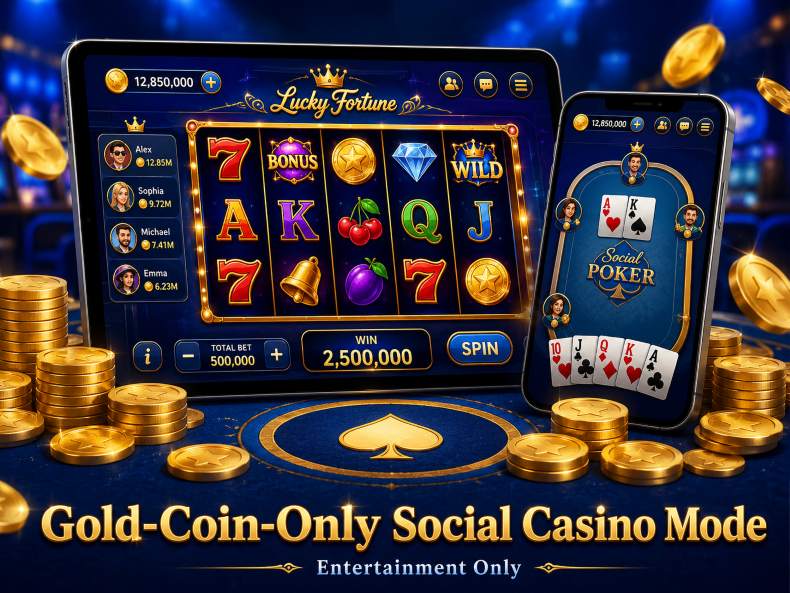
Chumba Casino, LuckyLand Slots, Global Poker, WOW Vegas, and Sportzino remain available in California through Gold-Coin-only play.
These platforms do not offer Sweeps Coins or any prize redemption option to California users. Players may purchase and use Gold Coins for casino-style entertainment, but balances cannot be redeemed for cash, gift cards, cryptocurrency, or other prizes.
These sites remain accessible, but California players are limited to entertainment-only play with no real-prize value.
California in the National Sweepstakes-Ban Trend
California is part of a broader crackdown on dual-currency sweepstakes casinos. At least 16 states took legal or regulatory action against the model in 2025 and 2026.
Montana enacted the first statewide ban, establishing a model other states could follow. Connecticut, New Jersey, Washington, and New York later introduced restrictions, enforcement actions, or proposed legislation.
California’s AB 831 is broader than many similar laws because it extends liability beyond operators to media affiliates and platform providers. Its unanimous passage, 36-0 in the Senate and 63-0 in the Assembly, also gives the law strong political support.
More states are likely to challenge the dual-currency model. In response, operators are developing single-currency platforms and parimutuel ADW products designed to comply with state restrictions.
Clovr tracks sweepstakes casino laws across all 50 states. See the related state guides for more information.
- 66% Off Mystery Box
- 25 Mystery Coins + 5 Cards
- For only $9.99
- Sign-up, Get 5 Cards + 2 MC
- Up to 45 MC Referral Bonus
- VIP Exclusive Perks
- Surprise Daily Reward Drops
Terms 21+
Frequently Asked Questions
-
What happened to my Sweeps Coins balance on McLuck, Pulsz, or WOW Vegas?
California players had until 11:59 p.m. on December 31, 2025 to redeem their Sweeps Coins. After that deadline, SC gameplay and redemptions ended for California users. Check your email and account history for redemption records or unresolved balances.
-
Is the California sweepstakes ban permanent?
Yes. AB 831 is a permanent law with no expiration date. No legal challenge had suspended it as of June 2026, and repeal appears unlikely.
-
Can I use a VPN to access a banned sweepstakes casino?
Using a VPN is not a crime under AB 831, but it usually violates the operator’s terms. This may lead to account closure, frozen balances, or failed identity verification. There is no compliant way to bypass California restrictions.
-
Did I break the law by playing before January 1, 2026?
No. AB 831 targets operators, payment providers, platform providers, and affiliates, not players. California users face no retroactive criminal liability.
-
Is Card Crush legal and safe in California?
Card Crush uses one redeemable currency, Mystery Coins, rather than a dual-currency model. This may place it outside AB 831 under the current interpretation.
However, California regulators have not formally confirmed the model’s long-term legality. Review the platform’s terms before adding funds.
-
What legal casino-style gambling is available in California?
California residents may use tribal casinos, licensed card rooms, the California State Lottery, and parimutuel ADW platforms such as GiddyUp and Horseplay.
Single-currency platforms such as Card Crush may also offer real-prize play, although their long-term regulatory status remains unsettled. California does not have regulated online casinos or legal online sports betting.
Affiliate disclosure: Clovr may earn referral revenue from sign-ups through links in this section. All platforms listed are verified as legally accessible to California residents. Clovr earns no revenue from and links to no dual-currency sweepstakes operator prohibited under AB 831.
Related reading:
- Best Sweepstakes Casinos in the US
- Sweepstakes Casinos in Texas
- Sweepstakes Casinos in New York
- Are Sweepstakes Casinos Legal
Think You’ve Got a Gambling Problem?
Call or text the National Council on Problem Gambling helpline: 1-800-522-4700 (24/7, confidential).
Last updated: July 2026 | Clovr.com